


The Lawyer’s Wardrobe: Essential Clothing for Male Attorneys
Picture the scene: 7:30 a.m., your first hearing, your nerves are already trying to stage a mutiny, and you’re staring at a closet that looks like a chaotic mix of university leftovers and half-hearted “grown-up” purchases.
What happens? Paralysis. Decision fatigue.
You know that moment when you’re late but still somehow trying on a third shirt? That’s the trap.
The way out? A mini-capsule wardrobe-three uniforms that never betray you.
Think of it like Shakespeare’s three-act structure: the serious drama (court), the tense negotiation (client meeting), and the quieter interlude (office). Each act has its costume.
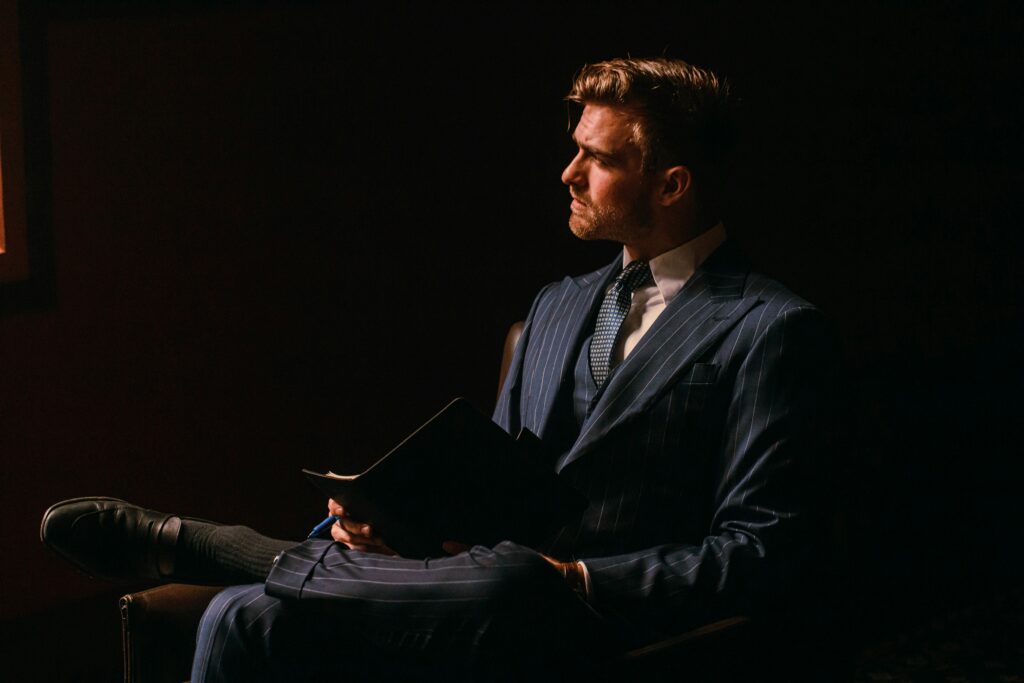
- Court days (formal): Navy or charcoal two-button suit in worsted wool (8.5–10 oz / 260–310 g/m² weight (source)), white poplin shirt, black cap-toe Oxfords (heel height 25–28 mm), dark silk tie (navy, burgundy, or deep green at 3–3.25 in width), dark over-the-calf socks (15 in minimum length), black belt (1–1.25 in wide), structured leather briefcase (full-grain, 15–16 in wide).
- Client meetings (business): Mid-grey suit or navy blazer with charcoal trousers, light-blue twill shirt (100–120 gsm weave density), brown belt, dark-brown Oxfords or derbies (Goodyear welt, 270° stitched sole), small-pattern silk tie.
- Office focus (smart casual): Navy blazer, OCBD (Oxford cloth button-down, 140–160 gsm, button spacing 3.5–4 in), taupe or mid-grey chinos, brown loafers (heel height 20–25 mm), pocket square optional, no tie.
Takeaway – capsule: Three uniforms stop decision fatigue and keep your look inside “court-ready” bounds.
Fit That Signals Authority: Suit Cut, Fabric, Lapels You Can Trust
Ever noticed how Barack Obama seemed to wear the same suit every day? He wasn’t lazy; he was tactical. He removed trivial decisions so his energy could go into ones that mattered. The same logic applies here-your suit’s cut either telegraphs competence or whispers chaos.
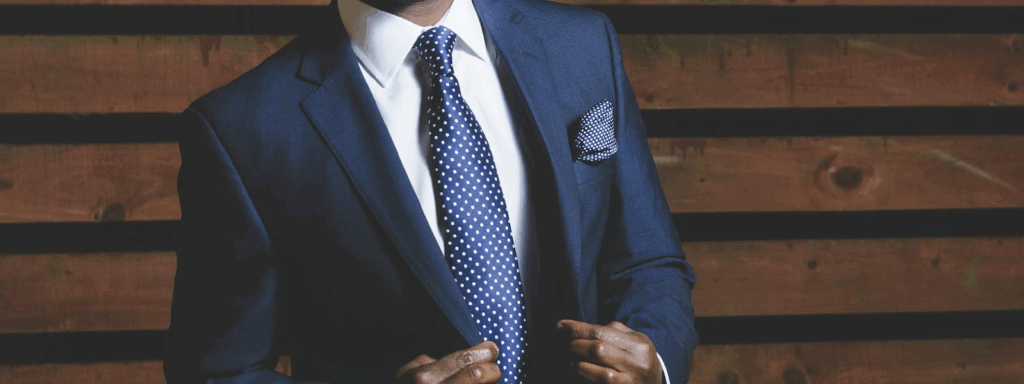
Cut that reads “competent” fast: single-breasted, two buttons, moderately structured shoulders, lapels 2.75–3.25 in wide, jacket length covering seat, trousers with a medium rise (10–11 in) and a slight break (¾–1 in of fabric resting on shoe). Double-breasted works for ceremonies, not hearings (think wedding photos, not arraignment).
Fabric that behaves under stress: worsted wool, thread count 80s–120s-fine enough to drape, not so delicate you’re babying it. Navy and charcoal anchor rotations. Black? That’s the Hamlet outfit-best saved for funerals.
Tailor checklist:
- Sleeve ends at wrist bone with ¼–½ in of shirt cuff showing.
- Trouser hem circumference 14–16 in.
- Waist suppression ~2–3 cm in.
- Collar gap no more than 2–3 mm.
Takeaway – fit: A clean shoulder line and correct sleeve length do more reputational work than flashy patterns.
Shirts That Stay Sharp: Collars, Fabrics, Stain Control
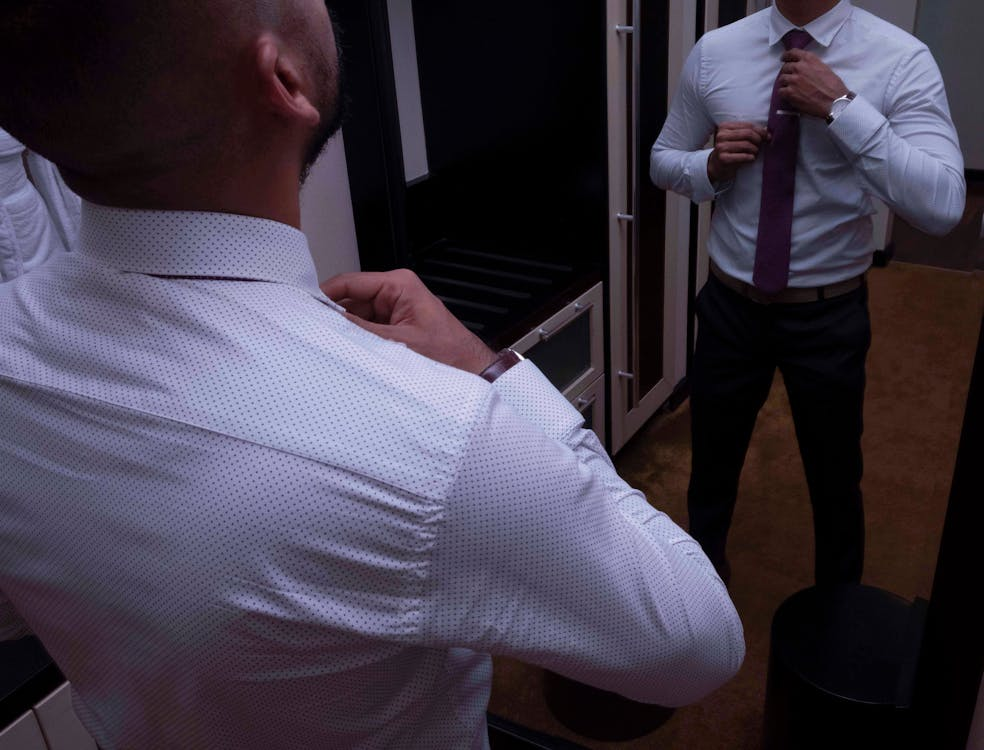
Imagine your collar collapsing in on itself like a wilted tulip during cross-examination. Distracting, right? Opposing counsel won’t hear a word you say because they’re wondering if you’ve ironed with a brick.
Collars that frame ties and faces: spread or semi-spread, 2–2.5 in collar point, spread angle 45–55°. Button-down for off-duty days. Band height 1.25–1.5 in so your tie doesn’t peek awkwardly.
Fabrics that resist glare:
- Poplin: crisp, smooth, like the Financial Times in shirt form (100s–120s two-ply yarn).
- Twill: subtle texture, hides creases (120–140 gsm).
- OCBD: thicker, easygoing, Oxford vibe (160–180 gsm).
Practical stack: three white poplins, three light-blue twills, two OCBDs. Replace once collars fray after 35–40 washes. Keep a stain pen handy – coffee never respects court schedules.
Takeaway – shirts: Crisp collar geometry and reliable weaves keep you photo-ready from docket to debrief.
Briefcases That Organize Your Day: Sizes, Layouts, Materials
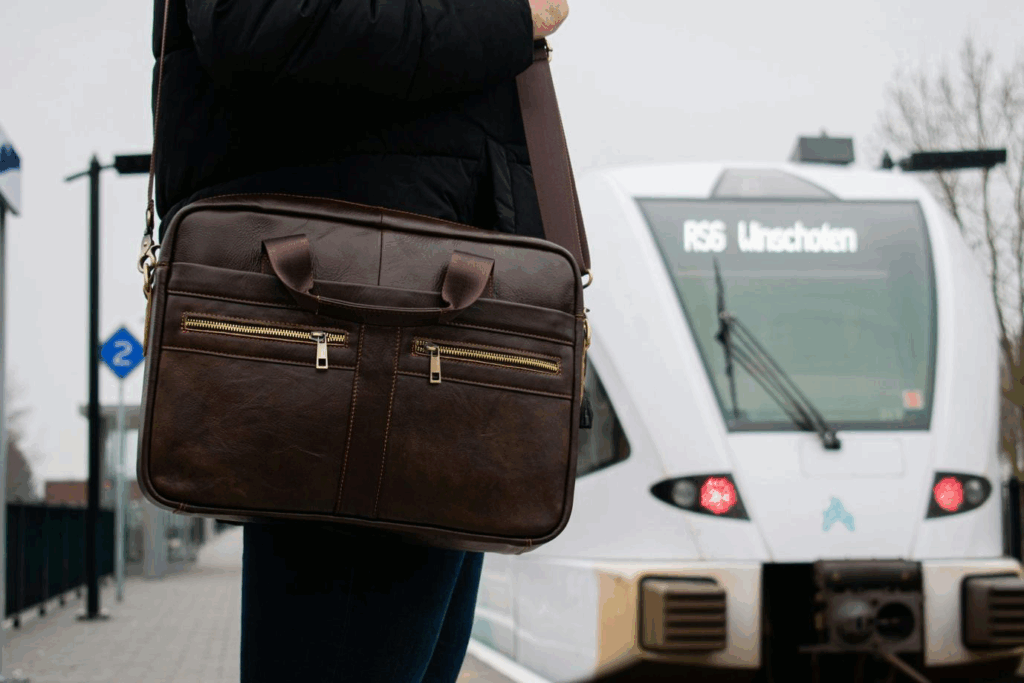
Your bag isn’t just a bag – it’s your portable chambers. Churchill carried red despatch boxes; you’ll carry black or brown leather.
And yes, lawyers still use a briefcase!
Here’s what to choose:
- Size: 15–16 in wide, 3.5–4.5 in depth. Fits 14–16 in laptop, legal pads (8.5 × 14 in), slim bottle.
- Layout: padded laptop sleeve, zippered docs, quick-access pocket, trolley sleeve.
- Materials: full-grain leather (1.6–1.8 mm), reinforced handles rated for 30–40 lbs, metal feet.
- Logo? Tiny embossing (<1 cm).
- Handles: padded 5–6 in handles, detachable strap with metal hardware.
- Color choice: black for conservative courts, dark brown for corporate, oxblood for flair.
- I like Von Baer’s advice on this – structured bags outlast flashy ones, so choose one made from full-grain vegetable-tanned leather that won’t sag over time.
Takeaway – bags: A structured briefcase becomes a mobile desk that quiets clutter and projects control.
Shoes That Earn Respect: Two Pairs, One Care Routine
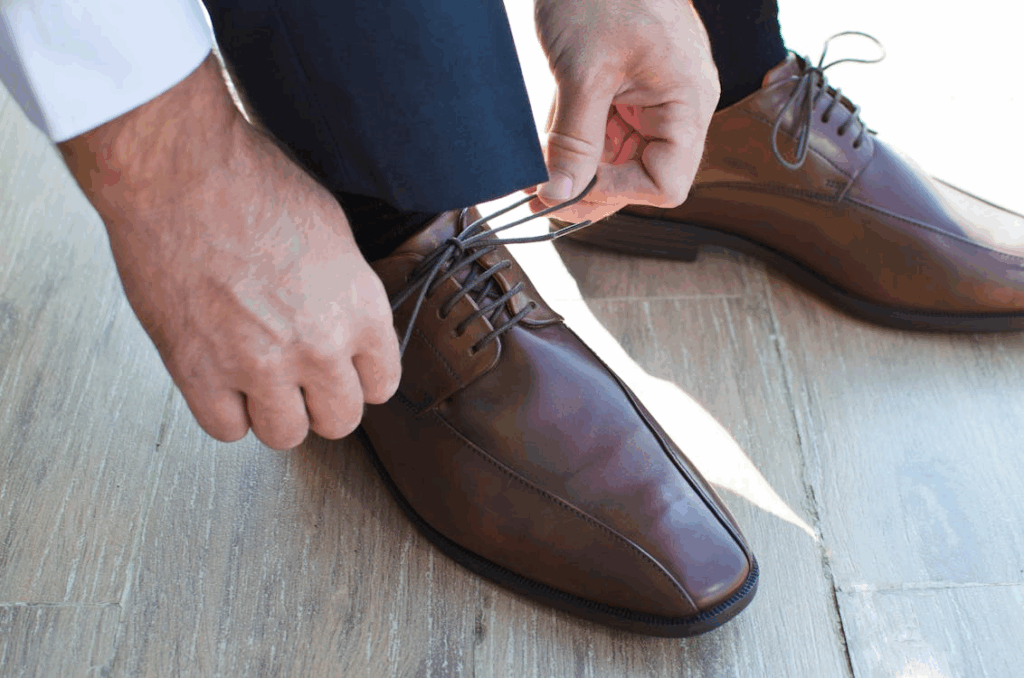
If your suit is the novel, your shoes are the publisher. Poor binding, and nobody takes the story seriously.
Core two:
- Black cap-toe Oxfords (5-eyelet, heel height 25 mm) for court.
- Dark-brown Oxfords or derbies for everything else.
Soles: leather (4–5 mm thick) for elegance, Dainite rubber for grip. Rotate daily, cedar shoe trees absorb ~30 ml of moisture overnight. Apply 1 g of cream per shoe monthly, wax before hearings. Rain coming? Slip overshoes in your briefcase-trust me, there’s nothing dignified about squelching across a marble lobby.
Takeaway – footwear: Two well-kept pairs outperform closets full of neglected experiments.
Neckwear, Belts, Socks: Tiny Tweaks That Prevent Visual Noise
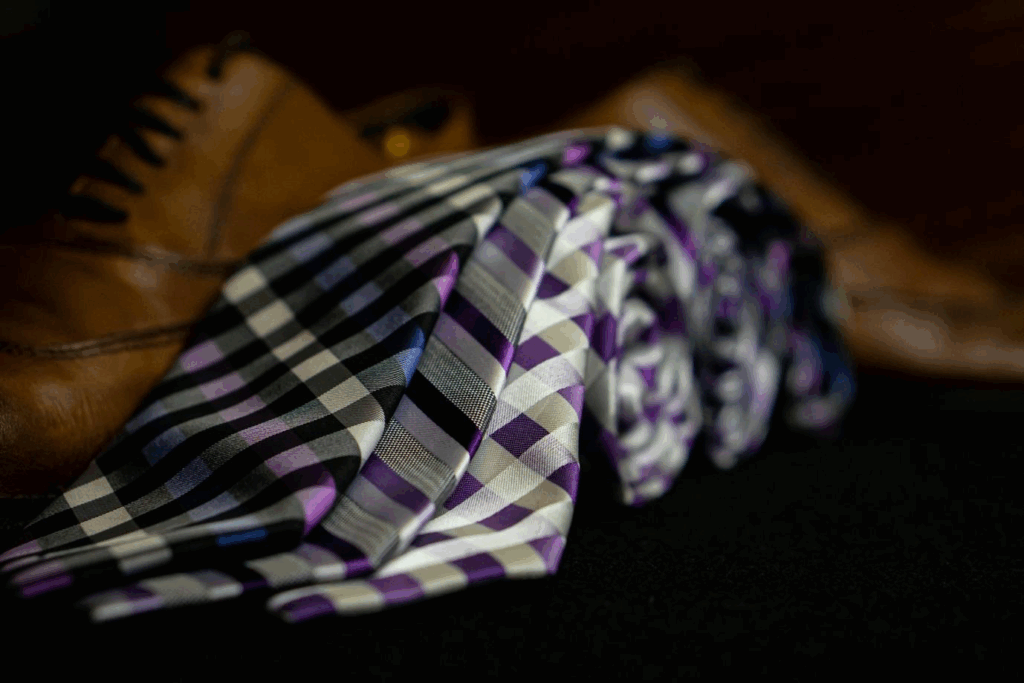
Ever seen a lawyer whose belt buckle shone brighter than their argument? Small mismatches scream louder than you think.
Ties: 3–3.25 in width, four-in-hand knot (5 cm) for symmetry. Patterns? Subtle: repeating stripes (3 mm spacing), dots (2–3 mm), foulards.
Belts: 1–1.25 in wide, buckle ~1.5 in, leather color = shoe color.
Socks: over-the-calf, 15 in shaft, 80–90% cotton or merino, 10–20% nylon/lycra for snap.
Pocket squares? White linen TV fold (10–12 in) for court. Muted color for meetings. Skip if nervous about overdoing it.
Takeaway – details: Consistent scale and finish across tie, belt, and shoes create quiet cohesion.
Outer Layers That Behave: Coats, Rain Gear, Mid-layers
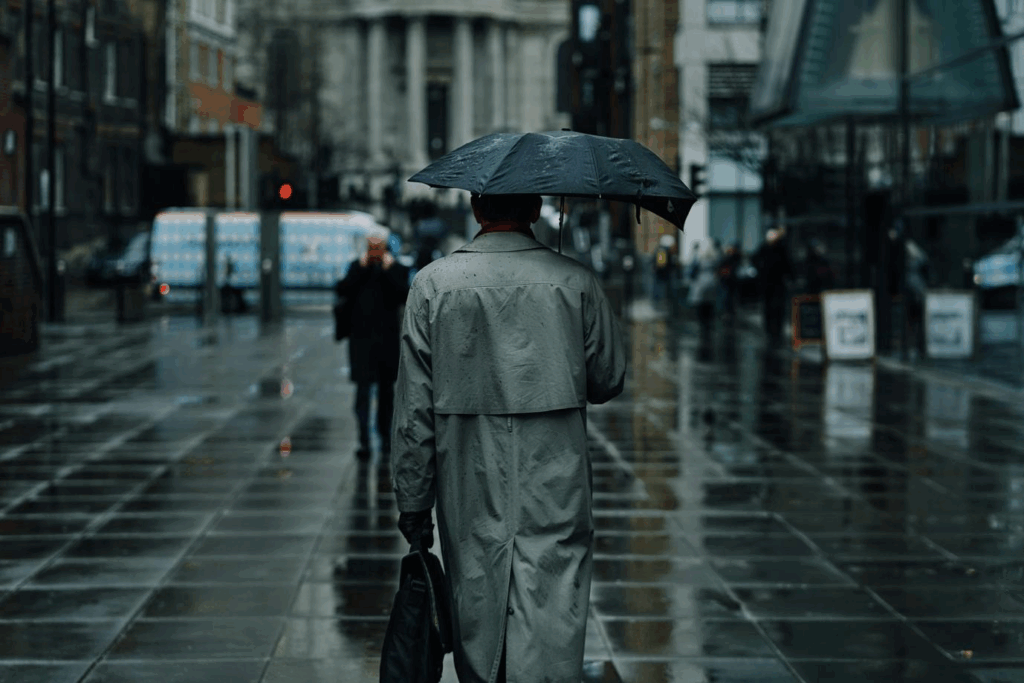
Think of outerwear like dust jackets on first editions-protective, discreet, never overshadowing the content.
Topcoat: navy, charcoal, or camel, knee-length (40–42 in), shoulder width +2 cm ease.
Rain gear: mac or trench, gabardine cotton (250–300 gsm), taped seams.
Office warmth: fine-gauge merino V-neck (16–18 microns, 220 gsm). Quilted gilet (100–120 gsm fill) works only under a coat.
Takeaway – layers: Weather protection should disappear into the silhouette, not drown it.
Grooming, Watch, Glasses: Signals People Notice First
No one remembers the sixth paragraph of a legal brief-but they will remember a frizzy hairline glowing under fluorescent light.
Hair: trims every 2–3 weeks. Beard guard #2–3, side hair 1.5–2 in. (source).
Fragrance: one spray (0.05–0.1 ml), wrists only.
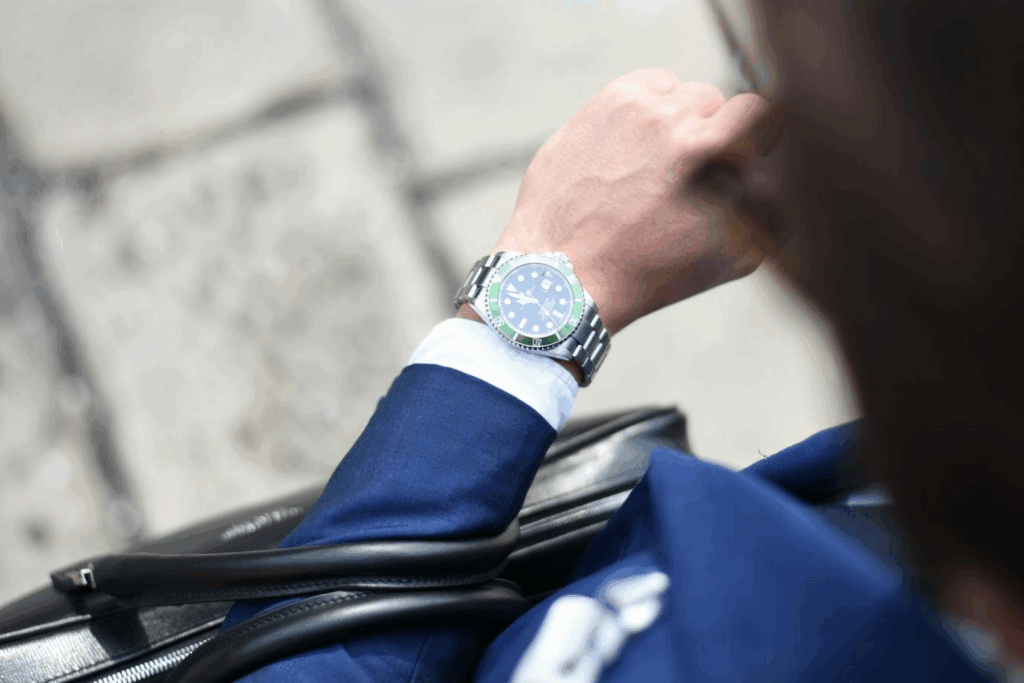
Watch: 38–40 mm, <11 mm thickness, case metal = belt buckle.
Glasses: thin acetate, anti-glare coating (<1% reflectance).
Takeaway – polish: Subtle grooming choices prevent distractions and lend steadiness to your presence.
Climate Tuning: Heat, Humidity, Cold Without Losing Form
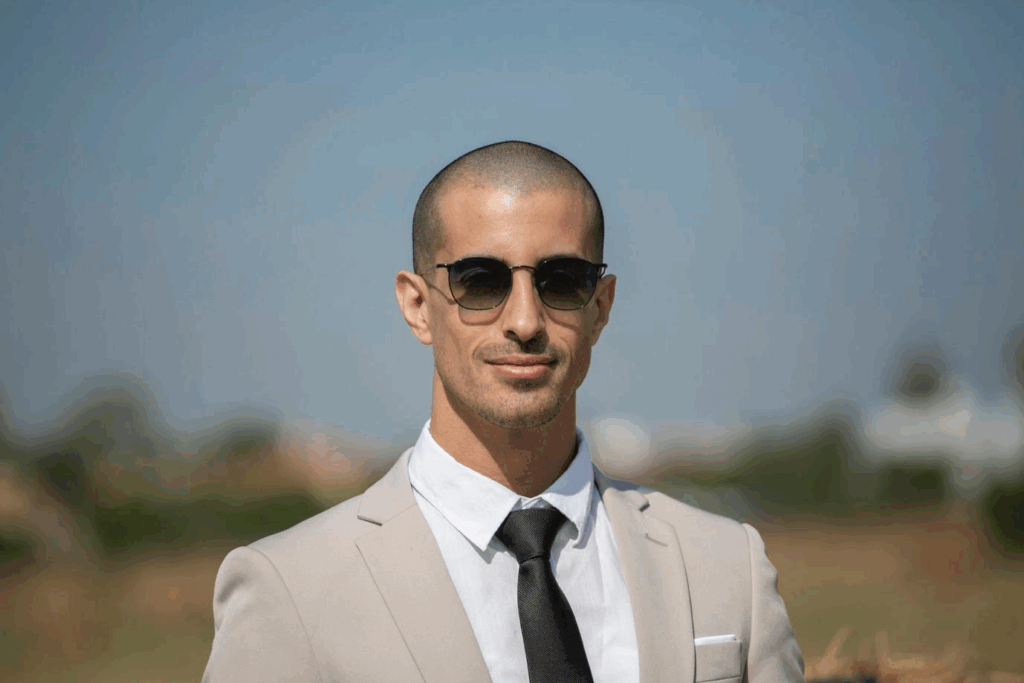
July in D.C.? Wool that feels like sandpaper. January in Chicago? Frostbite in seconds.
Heat: tropical-weight wool (7–8 oz), half-lining, spare shirt.
Cold: flannel (11–13 oz), merino base layers (200 gsm), topcoat.
Rain: mac, waterproof rating 5,000–10,000 mm, shoe wipes on hand.
Takeaway – climate: Fabric weight and lining choices control comfort far more than gadget fabrics under tailoring.
Quick Fit Audit: Five Checks Before You Leave Home
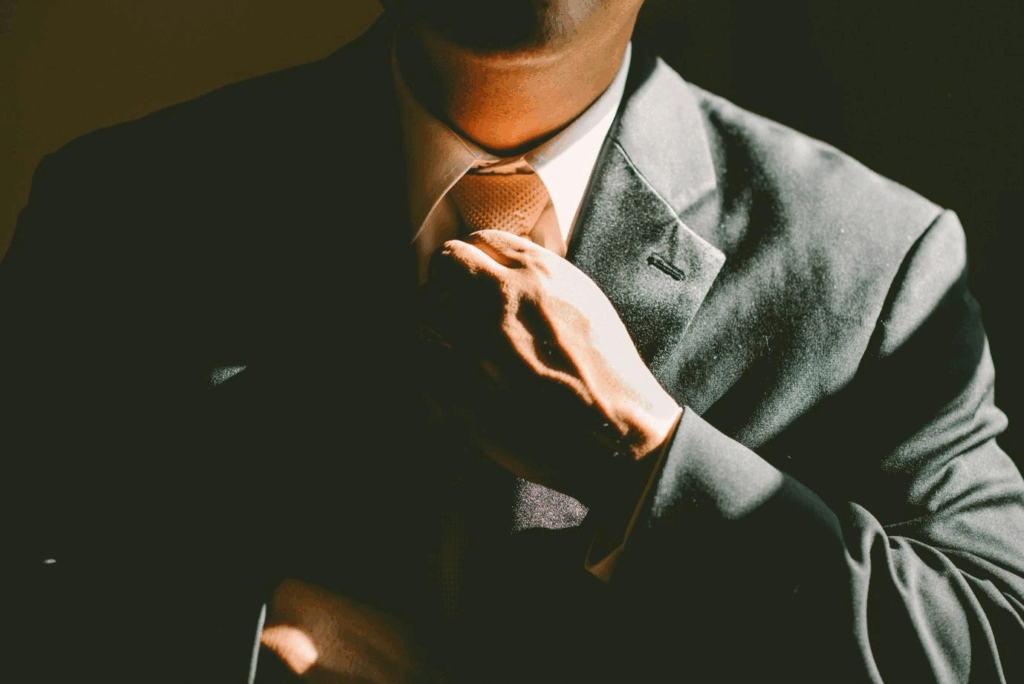
Before you leave chambers, channel your inner editor: final proofread.
- Jacket collar gap ≤2 mm.
- Sleeve shows ¼–½ in cuff.
- Tie dimple centered; tip touches belt buckle.
- Trousers slight break (¾ in front, 1.25 in back).
- Shoes buffed, laces tidy.
Takeaway – audit: A 30-second mirror checklist prevents small errors that distract judges and clients.
